What Is Proofreading? The Final Pass Before Your Book Prints
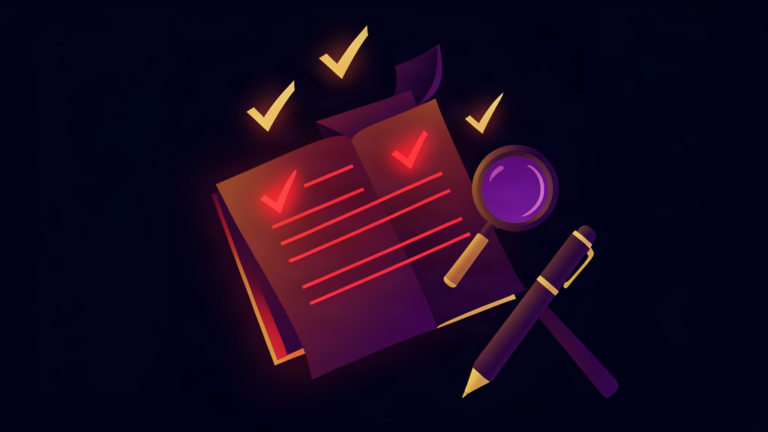
Many authors ask what is proofreading when they approach the end of their manuscript. Proofreading is the final pass of a text before it is published. It is the last line of defense against errors that may have survived previous editing stages. While other types of editing focus on structure or style, proofreading looks for technical mistakes. It ensures the final version is clean and professional.
What does proofreading catch compared to copyediting?
It is common to confuse proofreading with copyediting. Copyediting is a deep process. It focuses on grammar, style, and internal consistency. A copyeditor might suggest changing a sentence to improve flow or flag a plot hole. They ensure the tone is correct and the logic holds. You can read more about what copyediting is to see how it builds trust with a reader.
Proofreading happens after copyediting. Its goal is not to rewrite or improve the prose. Instead, it focuses on surface errors. A proofreader looks for typos, missing punctuation, and spelling mistakes. They find double spaces or mismatched quotation marks. They check that page numbers match the table of contents. If a copyeditor fixes the logic of a paragraph, the proofreader ensures that the fix did not introduce a new typo.
A proofreader handles the “mechanical” side of the text. They check forConsistency in capitalization. They ensure that a name spelled “Jon” on page ten is not “John” on page fifty. They look for widowed lines or orphans in a printed layout. This level of detail prevents the distraction of small errors. When a reader sees a typo, they stop thinking about the story and start thinking about the lack of polish.
Where does proofreading fit in the editing sequence?
Editing is a linear process. You cannot proofread a book that has not been copyedited. If you jump straight to proofreading, you will waste time. You might fix a typo in a sentence that a copyeditor would later delete. This is why the order matters. The general sequence moves from the big picture to the smallest details.
First, authors usually start with developmental editing. This stage handles the plot and pacing. Next comes line editing, which focuses on the rhythm and voice of the writing. You can compare line editing and copyediting to understand the transition from style to technical accuracy.
After copyediting, the manuscript is formatted. Once the text is in its final layout, the proofreader steps in. This is the “cold read.” The proofreader looks at the pages exactly as the reader will see them. They verify that the headings are correct. They check that the chapters start on the right pages. This is the final checkpoint. Once the proofreader gives the green light, the file is sent to the printer.
Understanding the four types of book editing helps authors budget their time. Proofreading is the shortest stage, but it is the most rigid. There is no room for major changes here. If you decide to rewrite a chapter during proofreading, you must go back to copyediting to ensure the new text is clean.
Is proofreading different for print versus ebooks?
The goals of proofreading remain the same regardless of the format. However, the focus shifts based on the medium. Print proofreading is heavily tied to the physical page. The proofreader must check for “rivers” of white space in the text. They check that no lines of text are cut off by the page edge. They verify that the gutter margin is wide enough so text does not disappear into the binding.
Ebook proofreading is different because ebooks are reflowable. The reader can change the font size or the background color. This means there are no fixed pages. An ebook proofreader focuses more on hyperlinks and navigation. They ensure that the table of contents links to the correct chapters. They check that images scale correctly on different screens. They look for strange breaks in the text that happen when the layout shifts.
Print books have a higher risk of permanent error. A typo in a print book stays there for every copy sold. An ebook can be updated instantly. Despite this, the standard for quality is the same. Both formats require a professional eye to remove the friction of errors. A professional layout in print requires a different set of checks than a digital file, but both need a final review.
What are the qualitative costs of professional proofreading?
Authors often worry about the cost of professional services. Rather than looking at a fixed number, it is better to think about the value of the investment. Professional proofreading is an insurance policy. It protects the author’s reputation. A book filled with errors looks amateur. This can lead to poor reviews and lower sales.
Costs vary based on the complexity of the text. Technical manuals require more precision than a short novel. The speed of the turnaround also affects the price. A rush job will always cost more. For general industry benchmarks, many authors look to the Editorial Freelancers Association to understand how rates are structured.
The cost of a mistake is often higher than the cost of the editor. In non-fiction, a typo in a factual claim can undermine the entire argument. In fiction, a misspelled character name can confuse the reader. Investing in a final pass ensures that the author’s voice is heard without the noise of technical failure. It is the price of professionalism.
How do you prepare a manuscript for proofreading?
A proofreader cannot fix a broken story. They are not there to help with plot or pacing. To get the most out of this stage, the manuscript must be “stable.” This means all structural changes are finished. The copyediting pass is complete. The text is in its final format, whether that is a Word document or a typeset PDF.
Authors should provide a style sheet to the proofreader. A style sheet lists the preferred spellings for unique names or fictional terms. It notes whether the book uses American or British English. It lists how the author prefers to handle Oxford commas. This prevents the proofreader from “fixing” something that was a deliberate choice.
If you are learning how to self-publish a book in South Africa, you know that the local market expects a high standard. Preparing the file correctly saves money. The proofreader should not spend time fixing basic formatting errors that the author could have handled. The goal is to let the professional focus on the errors that are hard to see.
Finally, ensure the text is clean of all previous editing marks. The proofreader needs a fresh version of the text. They should not be distracted by old comments or tracked changes. A clean file allows the proofreader to see the text as a stranger would, which is the only way to find the most elusive typos.
Should you use DIY proofreading or a professional?
Many authors try to proofread their own work. This is rarely successful. The human brain is designed to see what it expects to see. When an author reads their own sentence, their mind fills in the missing word or ignores the typo because it knows the intended meaning. This is called “cognitive blindness.”
A fresh pair of eyes is the only way to find errors. Some authors use friends or family, but this is risky. Non-professionals often miss technical errors or suggest stylistic changes that should have happened during line editing. They may not know the difference between a hyphen and an en dash, or how to spot a double space.
Professional proofreaders are trained to look for specific patterns. They follow a systematic approach to the text. They know where errors typically hide, such as in the first and last lines of a paragraph. Organizations like the Chartered Institute of Editing and Proofreading provide the standards that professionals follow. A professional does not just find typos: they ensure the book meets industry standards.
The choice between DIY and professional proofreading is a choice between risk and certainty. DIY is free, but it leaves the author guessing. A professional provides the certainty that the book is ready for the public. For most authors, the peace of mind is worth the cost.
Frequently Asked Questions
Is proofreading the same as editing?
No. Editing is a broad term that includes structural and stylistic changes. Proofreading is a specific, final stage of editing. While editors might change the meaning or flow of a sentence, a proofreader only corrects technical errors in the final version of the text.
Can I proofread my book after I publish it?
You can find errors after publication, but it is too late for print. You can issue a second printing with corrections. For ebooks, you can upload a new version. However, the first impression is the most important for a new author.
How long does proofreading take?
The time depends on the word count and the level of detail. A professional proofreader typically handles a few thousand words per day. A full novel might take one to two weeks. The timeline depends on the editor’s current workload and the deadline.
Do I need a proofreader if I used a spellchecker?
Yes. Spellcheckers are helpful, but they are not perfect. They cannot detect words that are spelled correctly but used wrongly, such as “their” instead of “there.” They also miss subtle formatting errors and inconsistencies in character names.
Does proofreading include checking facts?
Generally, no. Fact-checking is part of the copyediting or developmental process. A proofreader assumes the facts are correct. They focus on whether the facts are presented without typos or punctuation errors. They do not verify the data itself.
Knowing what is proofreading allows authors to navigate the publishing process with confidence. It is the final step that turns a manuscript into a professional book. By treating it as a distinct and necessary stage, authors ensure their work is presented in the best possible light. A clean book is a sign of respect for the reader and the craft of writing.